ROOTED HERE
The places behind the name.
A whole city’s story.
Steinbeck’s hometown, a working agricultural city and a downtown full of small discoveries. Salinas pairs literary history with neighborhood kitchens, independent stores and the everyday life of the valley.
People made the city.
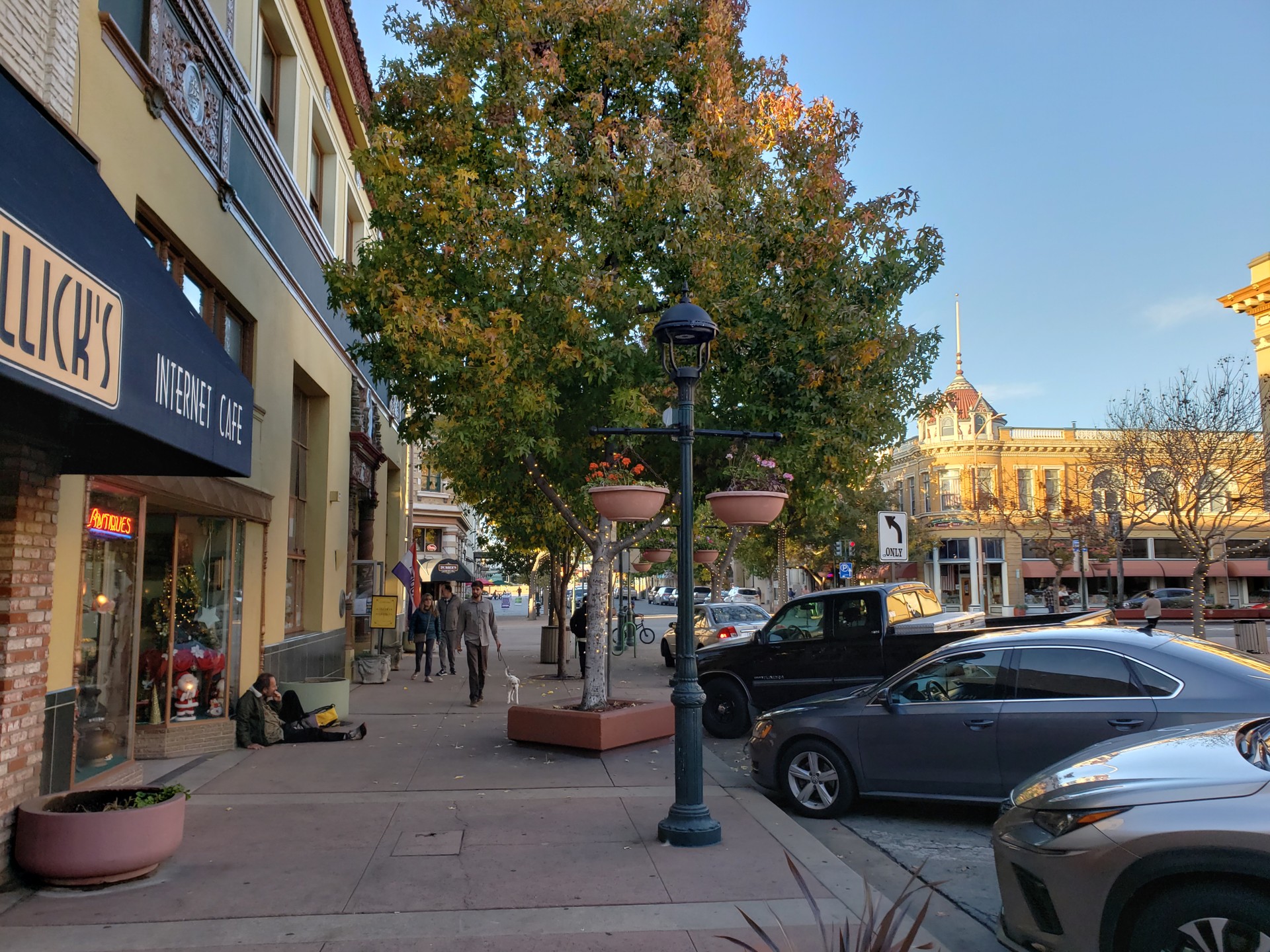
Oldtown centers on Main Street and the streets around the National Steinbeck Center. Alisal’s East Alisal Street corridor offers another concentration of neighborhood kitchens and shops. South Main and North Main are distinct commercial areas; use the map to group stops rather than assuming a single walking circuit. Read the local history.
- Before the town
Indigenous communities
The Salinas area’s human history begins long before the nineteenth-century town. Public history collections offer a place to begin learning about these communities.
Historical source ↗ - 1867
A planned town and a railroad connection
Local businessmen laid out a town plan and pursued a Southern Pacific Railroad connection, supporting the growing agricultural economy.
Historical source ↗ - 1872
A county seat
Salinas became the seat of Monterey County in 1872.
Historical source ↗ - 1874
Municipal incorporation
Salinas incorporated in 1874. The city’s name refers to nearby salt marshes.
Historical source ↗ - Twentieth century
An architectural record
Art Deco and Moderne buildings record a later period of commercial growth. The Steinbeck House connects the city to the writer’s early life.
Historical source ↗
See the history for yourself.
Explore the city through its museums and historic places. Confirm opening days and tour arrangements. Local history and visitor information.
For deeper research, the Salinas libraries is a starting point for archival material and research help. Historic photographs have their own permissions; we link to the collection instead of treating every old image as free to reuse.
Selected milestones researched September 13, 2026. This is an introduction, not a complete account of the city’s history.